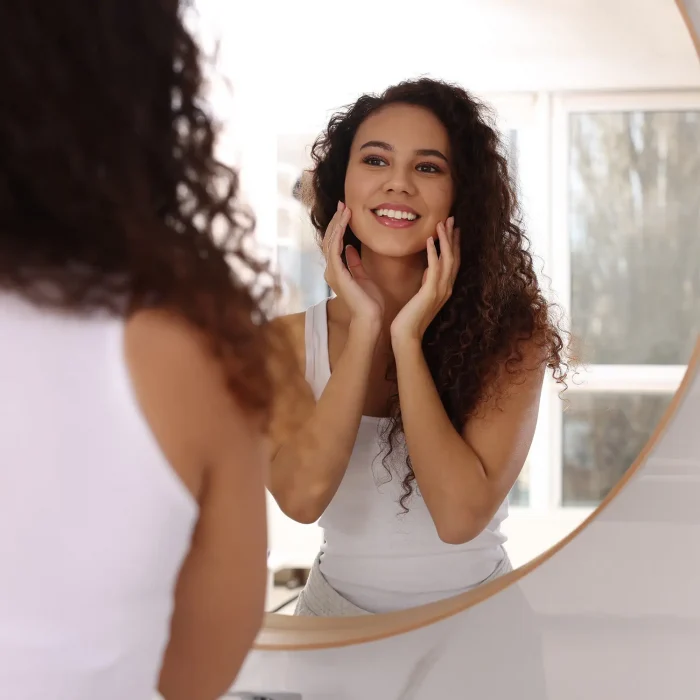

We’ve all been there: catching a glimpse of ourselves in a Zoom window or a stray mirror and realizing that the “11s” between our brows are looking a little more permanent than they used to. Or noticing that your forehead still looks “expressive” even when you’re completely relaxed. If you’re researching Botox vs. Dysport in Cleveland, this guide will help you compare the two based on how they work, how they’re commonly used, and what to expect.
Neuromodulator injections (Botox®, Dysport®, Xeomin®, Jeuveau®, Daxxify®) remain the most common minimally invasive cosmetic procedure in the U.S., with 9,883,711 treatments reported in 2024. — American Society of Plastic Surgeons (2024)
In this guide, we’ll break down how wrinkle relaxers work, compare Botox and Dysport, and explain how to decide what’s best for your anatomy and goals.
(Educational content only; not medical advice.)
At a Glance:
- Wrinkle relaxers like Botox and Dysport temporarily relax targeted facial muscles to soften dynamic lines and help prevent them from setting deeper over time.
- Botox is often selected when a more localized, precise placement approach is the goal.
- Dysport is often selected for broader areas where a softer, more blended effect is desired.
- Many people notice early changes in about 3–7 days, with full results typically assessed around 14 days.
- Results commonly last about 3–4 months (varies by person and area). Units are product-specific and not interchangeable.
Next step: If you’re planning around an event, book at least 2 weeks in advance so results can fully develop and settle. — FDA Prescribing Information (BOTOX Cosmetic)
Understanding the Science: How Wrinkle Relaxers Work
To understand wrinkle relaxers, it helps to know the two major wrinkle types:
- Dynamic wrinkles: Appear with movement (laughing, frowning, squinting).
- Static wrinkles: Remain even when your face is at rest (often developing over time).
Neuromodulators reduce the muscle signaling that drives repetitive creasing, giving the overlying skin a chance to look smoother while still keeping your face looking like you.
The “Preventative” Power of Early Treatment
You may hear terms like “Baby Botox” or “preventative treatment.” The basic idea is that using smaller doses earlier can reduce the intensity of repetitive movement that contributes to lines becoming more established over time. This is still a highly individual decision, and the goal is typically softening, not eliminating expression.
Botox: Targeted Control for Dynamic Lines
Botox Cosmetic (onabotulinumtoxinA) is widely used and commonly selected when controlled, targeted placement is the priority. It’s often chosen for smaller areas where precision matters most.
Often-used areas
- Glabellar (“11”) lines
- Crow’s feet
- Smaller, more precise treatment zones
Timeline (typical)
Many people notice early changes in about 3–7 days, with full results typically assessed around 14 days.
Dysport: Often Chosen for Larger Areas and a Softer, Blended Look
Dysport (abobotulinumtoxinA) is another botulinum toxin type A neuromodulator. Some injectors prefer it for areas where a softer “blended” outcome across a broader region is desired (anatomy and technique matter most).
Often-used areas
- Forehead lines
- Larger treatment zones where a more evenly distributed effect is preferred
Timeline (typical)
Timelines vary, but some patients may notice effects earlier, with results continuing to develop over time.
Comparing the Contenders: Botox vs. Dysport
Choosing between these two isn’t about which one is “better” overall — it’s about which is better for your anatomy, movement patterns, and goals.
| Feature | Botox | Dysport |
|---|---|---|
| Active Ingredient | OnabotulinumtoxinA | AbobotulinumtoxinA |
| Often chosen for | More targeted placement in smaller areas | Larger areas where a softer, blended look is preferred |
| Onset | Varies; full effect typically assessed ~2 weeks | Varies; some may notice earlier changes |
| Duration | Often ~3–4 months | Often ~3–4 months |
| Units | Product-specific units | Product-specific units |
Important note: units are not equal
Botox and Dysport units are not equivalent, and published conversion ratios vary widely. Rather than relying on a single conversion number, dosing should be individualized based on the treatment area, muscle strength, and injector technique. — Karsai & Raulin (JAAD)
Choosing Botox vs. Dysport in Cleveland
The most important factor isn’t the brand — it’s anatomy + placement strategy.
Botox may be a better fit if you:
- Want a very targeted approach in smaller areas
- Prefer a “precision” plan tailored to specific muscle groups
Dysport may be a better fit if you:
- Want a softer, blended result across a broader area (often the forehead)
- Prefer a plan designed for broader diffusion across a treatment zone
Either way, what matters most:
- A provider who evaluates your face in motion
- A plan built around your muscle strength, asymmetry, and goals
- Conservative dosing that keeps results natural
What to Expect During Your Visit
The Consultation
A good consultation includes facial mapping in motion — frown, squint, raise your brows — to understand how your muscles move and where lines form. At NuIQ, we also incorporate VISIA imaging (a clinical photo analysis system that captures detailed skin features like texture and sun damage) to add insight that’s unique to you.
The Injection
The injections are typically quick, and most patients describe the sensation as a brief pinch.
Post-Care (first 24 hours)
- Stay upright for at least 4 hours
- Avoid intense exercise for 24 hours
- Avoid rubbing or massaging the treated area
Safety and Considerations
Wrinkle relaxers are common and generally well-tolerated, but they’re still medical procedures. Botulinum toxin products include warnings that effects may spread beyond the injection area in rare cases.
Wrinkle relaxers may not be appropriate if you are pregnant, breastfeeding, or have certain neuromuscular conditions. Always discuss your full medical history with a qualified provider.
Key Takeaways for Your Next Appointment
- Botox and Dysport both relax specific facial muscles to soften dynamic lines.
- Botox is often used when a more localized, precision-based plan is desired.
- Dysport is often used for broader treatment zones where a softer, blended look is preferred.
- Many people notice changes within the first week; final results are typically assessed around two weeks.
- Results commonly persist for a few months (often around 3–4 months), depending on the area and your individual response.
- Units are product-specific and should not be compared directly between brands.
Frequently Asked Questions
Will I look “frozen” or lose expressions?
Not if it’s planned well. Most unnatural results come from dosing or placement that isn’t tailored to your anatomy. The goal is usually softening movement — not erasing expression.
Does it hurt?
Most people find it very tolerable. It’s usually a quick pinch and the process is fast.
How far in advance should I book before an event?
Plan at least 2 weeks ahead so results can fully develop and settle.
How long do results last?
Often around 3–4 months, but it varies based on treatment area, metabolism, and muscle strength.
Can I switch between Botox and Dysport?
Often, yes — decisions are typically based on treatment goals, areas being treated, and individual response.
Ready to talk through Botox vs. Dysport?
If you’re considering wrinkle relaxers in Cleveland, a personalized consult can help determine which option best matches your facial anatomy, goals, and timeline. Our team evaluates your facial movement, answers your questions, and builds a plan designed for natural-looking results.
NuIQ Wellness Lounge & Med Spa
5450 Detroit Ave, Cleveland, OH 44102
Call: 216-377-1778
Educational content only; not medical advice.